
Wednesday, November 1, 2017
Adagio for String Ensemble no. 1
Transverberation of the heart.
Donations toward the final production, engineering, and release of Lyraka Volume 2 (or simply my music in general) can be made by Pay Pal to: lyrakametalopera@yahoo.com and thanks for all the amazing belief our patrons have shown over the years, "in our hearts you'll live forevermore!".
Completed and © February 1st, 2019 Andrew Neires DiGelsomina. All rights reserved, infringers will be prosecuted to the fullest extent of the law.


Friday, September 1, 2017
The Serial Vignette Approach to Composition
After recently reviewing my work of the past eleven years, I've come to realize that I'd quasi-inadvertently invented a musical form that is the product of what I call Serial Vignette Composition. That type of writing was already evident on Lyraka Volume 1 ("Palace Guard", "Errandia", "Neires"), and since then I have refined its execution a great deal, coming to a strikingly effective...let's say, personality quirk. This form of stream-of-conscious, almost film cue-esque writing has never been as thoroughly explored as in my music.
Please bear with me for a mercifully brief autobiographical aside.
When I was young, my parents were huge movie buffs, and we regularly went to cinemas to indulge. Movies were a big part of my life since I was young, and I came to love them very much. I was a fan of Coppola, Kubrick, and Scorsese, and during the 90s Quentin Tarantino. In regard to Tarantino, I'll never forget watching the layout of his films ("Pulp Fiction" and "Kill Bill" for just two instances) and feeling as though I'd found a creative soul mate. The way I diverge from his method is by not being as ruled by the movie form as he (understandably) wa$. To elucidate, Tarantino's films led to satisfying conclusions/resolutions, despite the odd internal sequencing, while my music tends to mirror more the internal experience by often leaving conflicts unresolved, or radically resolved to (say), a rare (and/or seemingly random) chord or sudden halt, explosion...MacGuffin. Those last mentioned attributes were especially striking to me when I started studying the films of Alfred Hitchcock and the repertoire of his greatest collaborator, maestro Bernard Herrmann, because such irresolution is part and parcel of their art as well (even more fun: I didn't even discover Vertigo until after I turned 50 lol! It was like I had a couple of artist friends all this time and never knew it! :). Watch the movie, pay close attention to the score, and you'll understand better what I mean.)
This style of composition could be seen as either an oblivious concession to and/or more "artistic" example of of the ADD (i.e. popular) culture we live in, but it originally stems more from my own, vignette-laden inner experience. To be more specific, I often reflect on experiences in a cinematic way, and this is why much of my music sounds storyboard-ready.

Please bear with me for a mercifully brief autobiographical aside.
When I was young, my parents were huge movie buffs, and we regularly went to cinemas to indulge. Movies were a big part of my life since I was young, and I came to love them very much. I was a fan of Coppola, Kubrick, and Scorsese, and during the 90s Quentin Tarantino. In regard to Tarantino, I'll never forget watching the layout of his films ("Pulp Fiction" and "Kill Bill" for just two instances) and feeling as though I'd found a creative soul mate. The way I diverge from his method is by not being as ruled by the movie form as he (understandably) wa$. To elucidate, Tarantino's films led to satisfying conclusions/resolutions, despite the odd internal sequencing, while my music tends to mirror more the internal experience by often leaving conflicts unresolved, or radically resolved to (say), a rare (and/or seemingly random) chord or sudden halt, explosion...MacGuffin. Those last mentioned attributes were especially striking to me when I started studying the films of Alfred Hitchcock and the repertoire of his greatest collaborator, maestro Bernard Herrmann, because such irresolution is part and parcel of their art as well (even more fun: I didn't even discover Vertigo until after I turned 50 lol! It was like I had a couple of artist friends all this time and never knew it! :). Watch the movie, pay close attention to the score, and you'll understand better what I mean.)
This style of composition could be seen as either an oblivious concession to and/or more "artistic" example of of the ADD (i.e. popular) culture we live in, but it originally stems more from my own, vignette-laden inner experience. To be more specific, I often reflect on experiences in a cinematic way, and this is why much of my music sounds storyboard-ready.

Sunday, January 22, 2017
Symphony no. 1, Mvt. 1
This movement is composed of manifold vignettes in a stream of consciousness way. Think of a conversation between an ensemble of personalities (or more precisely, points of view), each perspective going through the process of delineation, integration, assimilation, and sublation from all the others as its individuality asserts (and, through the process, concurrently affirms) itself. There are interjections, varying degrees of harmony and disharmony, variations within variations, use of aleatoric and randomization techniques, alternatingly stark and enormous layered rhythms, elements of the grotesque, modularity...
Special thanks to my Uncle John Shafer for unfailing support, and I mean from all perspectives, providing the tough love where applicable...I'm crazy aboout you, you're my family. Your belief put wings on my heart.


Special thanks to my Uncle John Shafer for unfailing support, and I mean from all perspectives, providing the tough love where applicable...I'm crazy aboout you, you're my family. Your belief put wings on my heart.

All music © 2015 Andrew Neires DiGelsomina
Tuesday, November 1, 2016
Volcano: A Psycho-Drama in Three Acts
Part 1:
This is not the final representation of this piece, however the writing and arranging is done.
In the song Volcano I envision the concept of will as like unto some immortal, Lovecraftian deity in its pure form so bizarrely foreign to people in ways, manner, and appearance as to drive you mad if you ever came upon it enflesh'd. All we really know of this essentially abstract concept is the jellied-gasoline spread and burn of it at its most intense; the creeping, sentient, dread-inducing way it dogs our steps, and finally the way our minds work to adjust to its omnipresence.
Someone cue a tritone!
The drama is in three acts, which play out like this:
Volcano
a) Treadmill
b) Abyss
c) Futility
Graham Bonnet plays Locke, the head of the Lyraka's Palace Guard, Veronica Freeman Scatherus (demonic possessor and servant of Abyss), and Rob Diaz the Abyss incarnated. The backing vocals are by Liz Vandall, whose audio will be replaced by Nina Osequeda on the final mix.
Part Two: "Volcano" Lead Guitar Parts: Philosophical Motivation, Context of Song, and Visualization
When it came to the lead guitar solos, I knew right off the bat that I wanted a bubbling lava sound to my lead, and technically it appears multi-tracking economy picking and arpeggiated phrases did the trick. I wasn't as concerned with playing something metronomically in time, stridently consonant, or tuneful. I wanted to represent artistically the bare will as lava, bubbling, splashing out of control.
As far as the cadenza in context, on these runs I visualized the heat of the above-mentioned, inexorable Will-lava; that primordial napalm which inspires the grind-slaves of Errandia to continue hurrying on to nowhere, all the time chained to a treadmill.
This is not the final representation of this piece, however the writing and arranging is done.
In the song Volcano I envision the concept of will as like unto some immortal, Lovecraftian deity in its pure form so bizarrely foreign to people in ways, manner, and appearance as to drive you mad if you ever came upon it enflesh'd. All we really know of this essentially abstract concept is the jellied-gasoline spread and burn of it at its most intense; the creeping, sentient, dread-inducing way it dogs our steps, and finally the way our minds work to adjust to its omnipresence.
Someone cue a tritone!
The drama is in three acts, which play out like this:
Volcano
a) Treadmill
b) Abyss
c) Futility
Graham Bonnet plays Locke, the head of the Lyraka's Palace Guard, Veronica Freeman Scatherus (demonic possessor and servant of Abyss), and Rob Diaz the Abyss incarnated. The backing vocals are by Liz Vandall, whose audio will be replaced by Nina Osequeda on the final mix.
Part Two: "Volcano" Lead Guitar Parts: Philosophical Motivation, Context of Song, and Visualization
When it came to the lead guitar solos, I knew right off the bat that I wanted a bubbling lava sound to my lead, and technically it appears multi-tracking economy picking and arpeggiated phrases did the trick. I wasn't as concerned with playing something metronomically in time, stridently consonant, or tuneful. I wanted to represent artistically the bare will as lava, bubbling, splashing out of control.
As far as the cadenza in context, on these runs I visualized the heat of the above-mentioned, inexorable Will-lava; that primordial napalm which inspires the grind-slaves of Errandia to continue hurrying on to nowhere, all the time chained to a treadmill.
In summa, I knew the runs I want to play and how, mult-tracked the same solo, to tighten it up like Rhoads (yet beyond) and pan one take each left and right, then pick my favorite one for the middle. I ended up with parts of the other solos that worked together as a counterpoint, so I used quite a bit of what I recorded, which is rare in my method.
https://youtu.be/jhz3NFZkf-I
Please donate toward the release of Lyraka Volume 2 by Pay Pal to this address: lyrakametalopera@yahoo.com
Please donate toward the release of Lyraka Volume 2 by Pay Pal to this address: lyrakametalopera@yahoo.com
Special thanks to Boris Vallejo, and a plain old simple-but-huge thanks to Andre Maquera for excellent rhythm guitar and for getting the heavy parts of this track together for me. Thom Carvey and Gary Spaulding on excellent bass and drums, respectively.
To hear this piece in completed and published form, please make a donation by Pay Pal to lyrakametalopera@yahoo.com. Your support will be massively appreciated!
To hear this piece in completed and published form, please make a donation by Pay Pal to lyrakametalopera@yahoo.com. Your support will be massively appreciated!
All of this was composed, arranged, produced, and engineered by me. This is not the final product.
All music, lyrics, everything ©2018 Andrew Neires DiGelsomina.
Wednesday, September 28, 2016
Music For Piano and Orchestra no. 1
© 2018 Andrew Neires DiGelsomina. All rights reserved, infringers will be prosecuted to the fullest extent of the law.
Saturday, November 30, 2013
Concert vs Popular Music
I've had people asking me if I expect my concert music (symphonies, string quartets, etc.) to be as popular as my Rock stuff for Lyraka and the answer is "of course not!". My symphonies, for instance, are by nature not going to be especially popular even by the broadest definitions of the term. I knew that when I began writing them. However, due to this capitalistic, MTV-led society we live in I feel I should expand upon my otherwise succinct answer.
Concert music is a way of taking what I sometimes consider the handcuffs of Rock forms off and taking flight with a vision that is entirely Andy-made and Andy-led. With Popular music (to clarify, by Popular music I include Rock, Metal, Country-Western, Hip Hop, MTV...you get the picture), you're typically given so many bars to make an impact, otherwise you start making the composition into something that isn't Popular music (i.e., not particularly liked by the majority of folks). Popular music requires adherence to a set of rules (I know, sounds like the philosophical opposite of what many people define as Rock music). Film scores are often the same way, aligning strictly with what's on the screen (though film composers like Goldsmith and Herrmann have in their scores pushed the envelope into art music with highly sophisticated and creative composition, harmonic deviltry, and idiosyncratic orchestration).
With concert music (I'll include the avante garde genre along with the abovementioned symphonies, REAL concerti, Kammermusik, etc.) one has the opportunity to make one's own rules according to inner experience (witness how my symphony writing rarely if ever conforms to the Classic/Romantic rules of structure, as my creative spirit won't settle for that kind of outer imposition...and yeah, I'm aware and couldn't care less how pretentious that sounds).
Some would read the above and wonder why I would share these non-Rock compositions with others if they were deeply personal and not necessarily adherent to forms that people know and deeply love. Well, I do want people to hear this music, for one my concert music is some of my most potentially enduring. Lyraka was written with sophisticated composition only peripherally in mind (I had to exorcise the rock guitar muse that was a big part of my getting into music in the first place), and I'm quite proud of many of the compositions there. However, that music was ultimately all about Jasmine's story and in no small part a gift to her and the magic she's brought to my life (thus, not necessarily compositionally advanced, though there are portents of future concert work there). My symphonies, etc. are for the far future, or however long humanity has before we either blow each other up or the climate finishes the job itself. I must also point out that my Composer's Sketchpad series was designed for both music students and fans to have insight into what Martin Popoff referred to (in his review of Lyraka Volume 1) as the "partaking in the thought process of a great songwriter".
Anyhow, after this burst of hot air, I hope everyone who didn't fall asleep gets the point 😝.
😝.
Here's a ten year old photo of me to lighten things up😏:

Concert music is a way of taking what I sometimes consider the handcuffs of Rock forms off and taking flight with a vision that is entirely Andy-made and Andy-led. With Popular music (to clarify, by Popular music I include Rock, Metal, Country-Western, Hip Hop, MTV...you get the picture), you're typically given so many bars to make an impact, otherwise you start making the composition into something that isn't Popular music (i.e., not particularly liked by the majority of folks). Popular music requires adherence to a set of rules (I know, sounds like the philosophical opposite of what many people define as Rock music). Film scores are often the same way, aligning strictly with what's on the screen (though film composers like Goldsmith and Herrmann have in their scores pushed the envelope into art music with highly sophisticated and creative composition, harmonic deviltry, and idiosyncratic orchestration).
With concert music (I'll include the avante garde genre along with the abovementioned symphonies, REAL concerti, Kammermusik, etc.) one has the opportunity to make one's own rules according to inner experience (witness how my symphony writing rarely if ever conforms to the Classic/Romantic rules of structure, as my creative spirit won't settle for that kind of outer imposition...and yeah, I'm aware and couldn't care less how pretentious that sounds).
Some would read the above and wonder why I would share these non-Rock compositions with others if they were deeply personal and not necessarily adherent to forms that people know and deeply love. Well, I do want people to hear this music, for one my concert music is some of my most potentially enduring. Lyraka was written with sophisticated composition only peripherally in mind (I had to exorcise the rock guitar muse that was a big part of my getting into music in the first place), and I'm quite proud of many of the compositions there. However, that music was ultimately all about Jasmine's story and in no small part a gift to her and the magic she's brought to my life (thus, not necessarily compositionally advanced, though there are portents of future concert work there). My symphonies, etc. are for the far future, or however long humanity has before we either blow each other up or the climate finishes the job itself. I must also point out that my Composer's Sketchpad series was designed for both music students and fans to have insight into what Martin Popoff referred to (in his review of Lyraka Volume 1) as the "partaking in the thought process of a great songwriter".
Anyhow, after this burst of hot air, I hope everyone who didn't fall asleep gets the point
😝. Here's a ten year old photo of me to lighten things up😏:
Sunday, October 20, 2013
Monday, July 1, 2013
Errandia
Sturm und Drang alternating with Meerfraulied, culminating in a most Macabre Minuet. When you listen patiently, you can hear how the simple opening motif goes through literally dozens of transformations: punctuating cellos and double bass during the first, Tristan und Isolde-esque orchestral section; highlighting the orchestra in the woodwinds during the second; set into multiple times, and keys; ultimately exploding into free form fantasies...
Sunday, February 10, 2013
A Fond Look Back: Working With Graham Bonnet
Sometimes things take a while to become completely clear. On the one hand, memories can get that (oft necessarily) photoshopped blur: outward quite pleasant, interiorly frosty. On the other hand, sudden revelations can be gleaned (even when that manufactured veneer suspiciously remains).
I was thinking this morning about a conversation I had a couple of weeks before Xmas 2012 with the main vocalist for my opera, Graham Bonnet. We had wrapped up Graham's vocal work for my "Fidei Defensor", and I was very happy talking to him, thrilled with his vocal performances... but please allow me to digress momentarily: Graham and I had some rough spots over the years we worked together, and things came to an angry head more than once. But I learned so much of value from him, very much like a rock 'n roll father to son, and I told him that. After his modest thanks, I thanked him profusely and...well, basically said goodbye. Graham wrote back minutes later: "That's far too final, I mean, I was hoping we can do more again soon."
Imagine how it felt when it really, finally hit me...to have heard something like that from a man whom I rate up there with Ronnie Dio and Rob Halford as my favorite Rock/Metal singers. And we're going to do more, I always have music for him, I love his voice and I love the way he sings my music.
I can tell anyone curious about Graham's current musical output: unlike many of his vocal contemporaries Graham has lost none of his original tone, and is still putting out high quality Classic Metal to this very day...and that's about as high praise as I can think of. Take it from an at least minimally accomplished musician and composer: there's no replacing Graham Bonnet.

I was thinking this morning about a conversation I had a couple of weeks before Xmas 2012 with the main vocalist for my opera, Graham Bonnet. We had wrapped up Graham's vocal work for my "Fidei Defensor", and I was very happy talking to him, thrilled with his vocal performances... but please allow me to digress momentarily: Graham and I had some rough spots over the years we worked together, and things came to an angry head more than once. But I learned so much of value from him, very much like a rock 'n roll father to son, and I told him that. After his modest thanks, I thanked him profusely and...well, basically said goodbye. Graham wrote back minutes later: "That's far too final, I mean, I was hoping we can do more again soon."
Imagine how it felt when it really, finally hit me...to have heard something like that from a man whom I rate up there with Ronnie Dio and Rob Halford as my favorite Rock/Metal singers. And we're going to do more, I always have music for him, I love his voice and I love the way he sings my music.
I can tell anyone curious about Graham's current musical output: unlike many of his vocal contemporaries Graham has lost none of his original tone, and is still putting out high quality Classic Metal to this very day...and that's about as high praise as I can think of. Take it from an at least minimally accomplished musician and composer: there's no replacing Graham Bonnet.

Friday, February 8, 2013
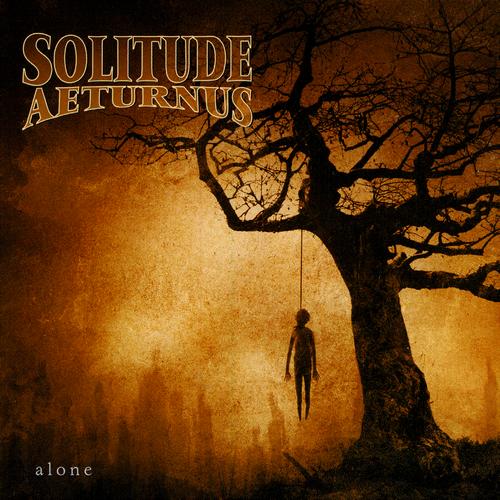
Solitude Aeturnus "Alone"
Doom Metal masters Solitude Aeturnus were in their early years disciples of bands as disparate as Candlemass and Fates Warning. Over the years they lost the influences and by the time of their album before this, "Adagio", seemed to have come up with what seemed an often entirely different sound (one that needed at least another album to anti-bug). In a surprising turn that ultimately produced the Doom Metal album of the 21st century, the band decided to reincorporate the classic Candlemass and Sabbath influences for "Alone", but this time integrating them with the most distinctive aspects of their own, established sound.
Alone is an album that is striking from beginning to finish, but I want to briefly touch on what might be the centerpiece, opener "Scent of Death". This track, leading us past Mesopotamian Gates made of Sabbath Stones, over Charon and into the land of the wizard's own, hazardous stone tower, is carried by a sound and flow that is most indicative of the album as a whole. Mesmerizing vocals, refreshingly imaginative in their note-choices, range of delivery, and arrangements; even offering impassioned, dramatic homage to the Adhanic (one can cross-reference Robert's Middle Eastern-sounding vocal excursions with the Arabic-sounding singing behind, say, the first scene of the Exorcist). The way the vocals work with the engaging verse/pre-chorus/chorus arrangements is just addicting and perfectly a propos to the song. And yes, you get plenty of guitar, fellow players, more than a bit in the classic Uli Roth/Iommi/Blackmore mode.
As mentioned, many of the above strengths apply to a great deal of the rest of the album. There are so many great riffs, woven together so maturely that it's hard to abstract them from the songs as a whole; yet rest assured there are plenty of riffs that reverberate very strongly within the psyche, and Robert Lowe's entrancing Arabiscisms will occupy that same space as well.
I won't go into detail regarding Robert Lowe's lyrics, as they are best experienced with the music playing, but I must point out that they are understated/underblown for a reason. The degree of self-immersion these lyrics are portraying is best delineated as succinctly as possible, the music handles the details.
My impression of this album remains one of gratitude. I think Robert's lyrics, vocals, and John's music just aligned somewhere in the sphere of Black Metallic Rainbow on this CD to make a work of masterfully Epic Metal proportions; the most involving, rewarding, memorable Doom Metal album since the untouchable Nightfall, and even a notch above the often terrific music Fr. Lowe made during his tenure with Candlemass. I paid the high import price for the bonus track version of the cd, to be without that track would definitely take away from the experience, so please be sure to track it down so you don't cheat yourself.

Alone is an album that is striking from beginning to finish, but I want to briefly touch on what might be the centerpiece, opener "Scent of Death". This track, leading us past Mesopotamian Gates made of Sabbath Stones, over Charon and into the land of the wizard's own, hazardous stone tower, is carried by a sound and flow that is most indicative of the album as a whole. Mesmerizing vocals, refreshingly imaginative in their note-choices, range of delivery, and arrangements; even offering impassioned, dramatic homage to the Adhanic (one can cross-reference Robert's Middle Eastern-sounding vocal excursions with the Arabic-sounding singing behind, say, the first scene of the Exorcist). The way the vocals work with the engaging verse/pre-chorus/chorus arrangements is just addicting and perfectly a propos to the song. And yes, you get plenty of guitar, fellow players, more than a bit in the classic Uli Roth/Iommi/Blackmore mode.
As mentioned, many of the above strengths apply to a great deal of the rest of the album. There are so many great riffs, woven together so maturely that it's hard to abstract them from the songs as a whole; yet rest assured there are plenty of riffs that reverberate very strongly within the psyche, and Robert Lowe's entrancing Arabiscisms will occupy that same space as well.
I won't go into detail regarding Robert Lowe's lyrics, as they are best experienced with the music playing, but I must point out that they are understated/underblown for a reason. The degree of self-immersion these lyrics are portraying is best delineated as succinctly as possible, the music handles the details.
My impression of this album remains one of gratitude. I think Robert's lyrics, vocals, and John's music just aligned somewhere in the sphere of Black Metallic Rainbow on this CD to make a work of masterfully Epic Metal proportions; the most involving, rewarding, memorable Doom Metal album since the untouchable Nightfall, and even a notch above the often terrific music Fr. Lowe made during his tenure with Candlemass. I paid the high import price for the bonus track version of the cd, to be without that track would definitely take away from the experience, so please be sure to track it down so you don't cheat yourself.
Sunday, September 30, 2012
Uli Jon Roth's "Why" Guitar Solo
I have been a guitar fan since I was around eight years old, many years before I ever picked up the guitar. Though I came late to the post-Scorpions Art of Uli Jon Roth, the guitar solos on Beyond the Astral Skies have become my favorite, in terms of both playing and tone, by anyone. Please grant me the benefit of patience while I offer some backround: when I was growing up, great solos for me included the ones for Flying High Again, Free Bird, Heaven and Hell, Beyond the Realms of Death, Black Rose, We'll Burn the Sky (from Tokyo Tapes), and Stargazer. Looking over those solos, it becomes obvious that I appreciate most the kind of solos that have an escalating quality. This particular solo epitomizes the aforementioned climbing quality...only here the word soaring is more apropos. The solo also serves to express musically the soloist's personal experience of the theme of the song; childlike wonder is artistically depicted in the upswept notes, a fearless spreading of infinitely spanning eagle wings. Au fond, Uli Roth once again proves the Sky is never the limit.

Sunday, September 25, 2011
Michael Schenker Group- Assault Attack

I often call this album Michael Schenker's Rainbow because I think this might have been close to what Rainbow's Down to Earth would have sounded like if Martin Birch had been in the producer's seat. Birch's production here is fantastic: Bonnet and Schenker sound better than ever before. Bassist Chris Glenn's highly contrapuntal playing is mixed perfectly, and even the relatively obscure drummer Ted McKenna comes across CRUSHING on a Cozy/Bonham level.
Opener "Assault Attack" is a perfectly paced Rocket-launcher of a track; the Beethoven-esque beginning gives way to a fast but spine tingling verse riff. Graham Bonnet propels the track with a personality and power the likes of which hadn't been seen since Dio or a classic Ian Gillan. The solo is a lesson in Heavy Metal Chamber Music, restrained yet contrapuntally outstanding for the genre. Listen to the bass guitar during the harmonised leads, it's more "neo-classical" from a counterpoint and harmonic perspective than Yngwie Malmsteen ever dreamed of being. Schenker's sparse lead melody here shows an astounding amount of maturity, poise, and taste that puts the final cast of cement on his statue in the Metal Guitar God Pantheon.
The next track, "Rock You To the Ground", is very much blues-based, but we're talking more like a defining, Blues-Metal style. The outrageous, belting vocals of Bonnet, as well as the perfectly fitting rhythm parts, launch this track into an instant, unforgettable Classic. During Schenker's parting lead, the various changes in the backing track drive him toward a jaw-dropping performance. Each change in the backing makes the sections play out like a chapter in a book: driving home various, highly memorable perspectives. This different-chapters-in-a-book approach to lead guitar has appeared in previously classic solos by other people (Jimi Hendrix's leads on "All Along the Watchtower"are a good example). But the solo on Rock You To the Ground is even more tasty and melodic. Overall, this song, and solo, have to be heard to be believed.
"Dancer" is the single/"All Night Long" of the album, and not without its charm. Though a bit long and awkward at times, it's hard to fault Bonnet and Schenker at this point in their careers, as they are truly firing on all cylinders. Great vocals and Michael is a peak of tastiness.
"Samurai" is considered by many people to be the song of the album. Again we have involved harmonies, this time in Bonnet's verse delivery. The chorus is extremely aggressive, and the ending where Bonnet holds the last note over the word "Samurai" whilst Schenker melodies on is absolutely spine-chilling.
For most others, "Desert Song" is the best song on the album, and there is good reason. "Desert Song" is easily up there with best "slow songs" of Classic Heavy Metal: "Stargazer", "We'll Burn the Sky", "Heaven and Hell", "Hallowed Be Thy Name", "Beyond the Realms of Death", "Fade to Black", "Love to Love", etc. The main riff, in thirds, is a classic of classics, impossible to forget. Bonnet hits a note right before the solo ("cooling the man") that is quite literally beautiful and moving. And again we have taste, restraint, and class during the middle lead break, whilst the passion springs forth after the last, emotionally delivered verse.
After this we have a couple of more meat-and-potatoes tracks, "Broken Promises" and "Searching For A Reason". The former is notable not only for the powerful high notes of Bonnet, but a musically very interesting bass guitar-to-drum syncopated beat, and an overall quirky atmosphere.
The last song is by far one of the greatest solo showcases in Rock/Metal history (and the foundation of Joe Satriani's entire career), "Ulcer". Although Schenker admitted later that this song was heavily overdubbed, there's no denying the exhiliration experienced when listening to this track. The middle, super fast lead break is both awe-inspiring and strangely catchy. Due to the latter aspect, it's difficult even referring to the solos on this track as "shred", there's too much personality and memorability to them.
In my humble opinion, this album is even better than the magnificent, Resoundingly Classic MSG albums that preceeded it. For me, that's saying alot, as I find the second MSG studio album in particular to be completely outstanding, despite the not-quite-so-great production.
For guitar players I assert that, in terms of overall guitar performance, there was never, and I mean NEVER a Shrapnel album that even comes close to this. Get this before you buy ANYthing produced by that massively overrated label. And if you've never heard Yngwie or his followers, get this before you buy ANYthing by him or his ilk, this way you'll learn more about how to play with feeling and melodicism, rather than masturbate the Harmonic Minor, Phrygian, and Aeolian scales ad infinitum, ad nauseum.
If there is a fault to this album (besides the doesn't-seem-quite-finished "Searching For A Reason") it's that a few of the songs repeat the chorus twice at the end. This might seem a bit lacking in imagination to some, but once you listen to the album you'll find yourself not caring. The overall sound, songwriting, guitar playing...shoot, overall playing by everyone, is incredibly inspiring and not something to be missed. This album inspired me greatly in writing my own music for my heavy metal opera Lyraka. I even got Graham Bonnet to sing my songs, which as you can imagine has been thrilling for me!
My favorite ever cds are this one and Rainbow Rising. I first heard both albums in 1986, after I'd been playing guitar for a couple of years. At the time, I was dropped out of college and homeless. Times were really horrible for me. I'll never forget hearing Assault Attack and being completely awed. I was already quite familiar with both Bonnet and Schenker, but for some reason this release had fallen through the cracks for me. Every time I thought about giving up the guitar back then(usually due to pressures resulting from my homelessness), I'd look at that cover and get renewed determination and strength. It looked to me like Michael was holding up that guitar out of rebellious determination in the face of terrible opposition.
But more, it looked like he held that guitar up in TRIUMPH, as though Assault Attack signified his sweet revenge against those who tried to keep him down. This album would help anyone to stay on track, to persevere against even the worse exploding warheads.
Andy DiGelsomina
Friday, September 24, 2010
Richard Wagner- Der Ring Des Nibelungen (Solti/Decca)

Subscribe to:
Posts (Atom)